

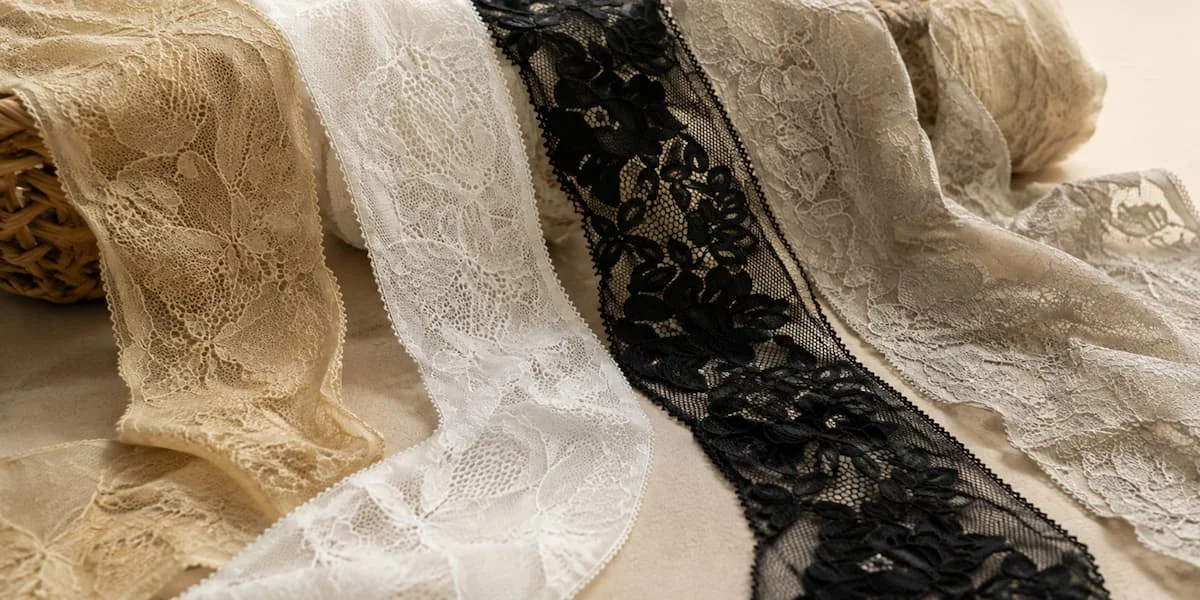
Great garments do not just capture attention; they hold a room still through quiet craftsmanship and subtle dimension. When we feel the intricate weight and artistry of custom attire, we immediately sense the difference between disposable fast fashion and intentional design. Selecting a premium embroidered lace fabric allows us to transform a basic silhouette into a striking work of art that carries depth, texture, and lasting sophistication.
Designing memorable eveningwear requires balancing delicate, sheer aesthetics with reliable structural support. When we work with an embroidered net lace fabric, we gain an airy, lightweight foundation that securely anchors detailed motifs without adding unnecessary bulk. This versatile mesh base gives us total control over how a garment moves, drapes, and catches the light across every seam.
Why Are Custom Handcrafted Textiles Returning to Modern Wardrobes?
Recent retail trends reveal a major shift toward personal craftsmanship. Industry data shows that the global custom and bespoke apparel market is projected to grow by over 6 percent annually through 2030. More people are choosing to sew or customize their wardrobe pieces rather than buy disposable garments. This movement relies on specialty textiles that offer tactile quality.
When we work with decorated sheer materials, we gain total control over garment structure and visual depth. Standard plain weaves often lack the dimensional contrast required for memorable occasion wear. Threadwork stitched onto mesh catches light dynamically, creating subtle motion in skirts, sleeves, and bodices. Furthermore, learning to manipulate these detailed textiles elevates our overall technical proficiency.
How Do Sheer Textile Foundations Compare?
Understanding base materials helps us choose the right foundation before cutting our pattern pieces. Different foundations behave uniquely under the needle and require specific handling during assembly.
| Base Material | Drape and Structure | Ideal Garment Application | Stitching Difficulty |
| Net Mesh Base | Flexible, open weave with natural recovery | Sleeves, overlays, formal skirts | Moderate |
| Organza Base | Crisp, firm structure with high sheen | Structured bodices, collars, volume skirts | Low to Moderate |
| Chiffon Base | Soft, fluid drape with matte finish | Blouses, romantic gowns, sheer panels | Moderate to High |
| Tulle Base | Sheer, delicate grid with light body | Veils, ballgown layers, decorative trims | High |
Selecting the right foundation ensures our garments maintain their original silhouette while offering comfortable wearability.
What Steps Ensure Clean Finishes on Sheer Materials?
Working with embellished textiles requires key technical adjustments to prevent snagging or uneven seams. Over our four decades of teaching and textile curation, we recommend these essential practical steps:
- Use fine machine needles, such as size 70/10 Microtex, to pierce netting cleanly without tearing fibers.
- Hand-baste complex pattern pieces before machine stitching to keep sheer layers aligned.
- Trim embellishments directly along seam allowances to prevent needle breakage during assembly.
- Finish raw inner edges with bias binding or French seams to protect skin from stiff embroidery threads.
- Press garments using a low-temperature iron and protective press cloth to safeguard delicate threads.
Applying these techniques guarantees that internal construction matches the beauty of the exterior design.
How Can You Elevate Your Sewing Skills?
Mastering complex textile construction requires practice, guidance, and proper tools. While self-study offers a start, hands-on instruction shortens the learning curve. Understanding grainlines, managing seam tension, and customizing commercial patterns to fit unique body shapes are skills best developed through direct experience.
When creators learn to manipulate challenging textiles confidently, their creative potential expands. Whether we are assembling a simple sheer accent or designing a full-length evening gown, having access to premium materials and experienced guidance makes every project achievable.
Conclusion
Creating timeless clothing relies on combining quality materials with proven sewing techniques. Integrating a refined embroidered lace fabric into our design repertoire introduces rich texture and luxury to everyday and special occasion pieces. Similarly, working with an Embroidered net lace fabric allows us to build light, breathable garments that feature striking detail and lasting beauty. For those seeking quality materials, specialized garment advice, and structured instruction, Zoelee’s Fabrics & Sewing School provides the resources and expertise needed to bring any creative sewing vision to life.
Frequently Asked Questions
- What is the best way to cut sheer embellished materials accurately?
Use a rotary cutter, sharp blades, and heavy fabric weights on a flat cutting mat.
- Should I wash embellished delicate fabrics before sewing?
Gently spot test or hand-wash delicate swatches in cool water rather than machine washing.
- What thread type works best for assembling sheer embroidered garments?
Fine polyester or silk thread provides needed seam strength without weighing down delicate, sheer fabrics.
- How do I stop sheer fabric edges from fraying or unraveling?
Construct narrow French seams, apply fine bias binding, or use a delicate line of fray check.
- Can beginners sew with decorated mesh and lace materials?
Yes, beginners can start with simple sheer sleeve inserts or small overlays to build confidence.